
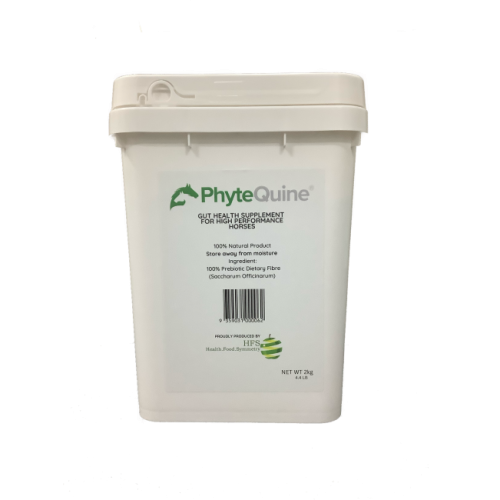
phytequine 2kg
HH-PHYTEQ2

Short Chain Fatty Acids (SCFA) and Butyric Acid production
The main source of nutrition for the cells in the colon, University of Queensland trials show that sugarcane fibre is fermented at a more uniform rate the whole length of the colon and produces much higher proportions of butyric acid which is associated with reduced inflammation.
Proven to be safe for horses
Feeding trials
Phase 1 began with firstly feeding 4 horses 300g per day per horse split between night and day feeds over a 4 week period. No obvious issues with observed with the horses taking this amount of PhyteQuine. 2 horses where in work and 2 horses spelling.
After the 4 weeks, PhyteQuine has then being used in the evening feeds of 6 horses regularly, generally when they have come into work, whilst in work and when their hard feed was increased at 60g per feed per horse. A visual improvement in their eating patterns and general health was observed.
Efficacy of dosage for Humans in trials and in the field is 1.5g/serve twice daily a calculation of 20g/serve twice daily has been applied to Horses.
Australian Made and Owned
No added preservatives or chemical stimulants
Whole-plant — combined effect greater than the sum of their separate effects
High in Plant-based Silica (Si) — bone strength
PhyteQuine™ feeds the diverse microbiome populations
Shelf stable
In the field
Anecdotal evidence has shown no side affects from horses being fed PhyteQuine by purchasers.
Bone Density
Silicon in soils is taken up by plants. Plants secrete organic acids at the tips of their roots. These acids dissolve oxides and other inorganic mineral salts, freeing the minerals in their ionic, pure form so that they can be absorbed. The silicon level in plants depends on species (grasses are higher
$149.60